
Character drift: why your coloring book character changes on every page
If each page was generated from a text prompt, the character will drift — because a sentence describes a category, not an individual, and the model draws a new one each time. The fix is not a better prompt. It is to lock one character as an image and generate every page as an edit of that image.
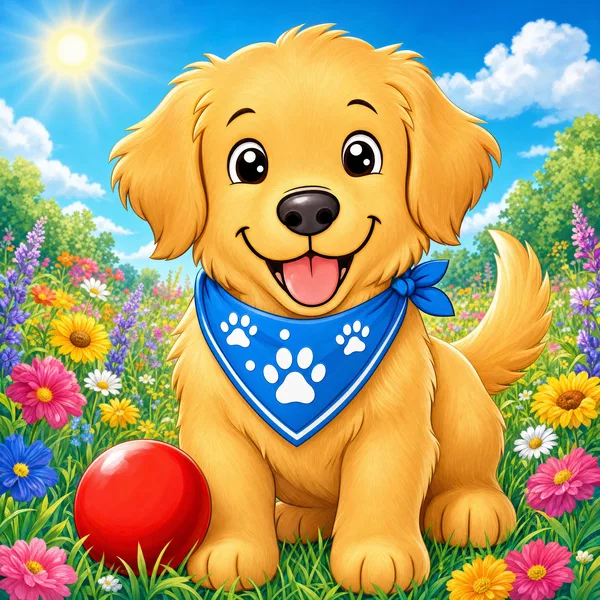
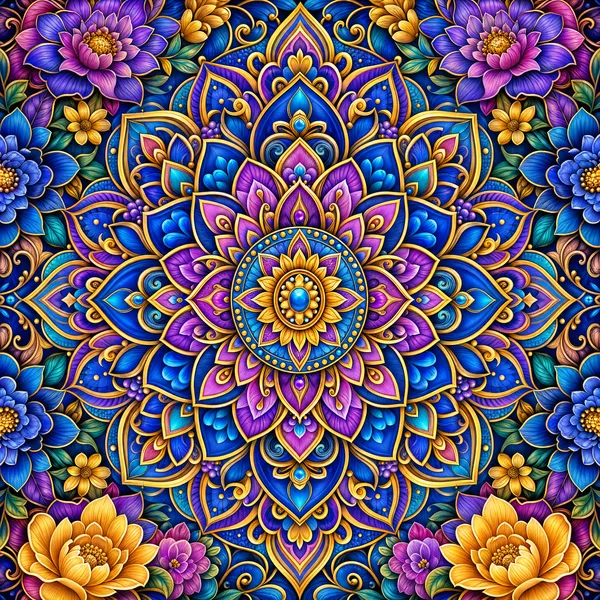
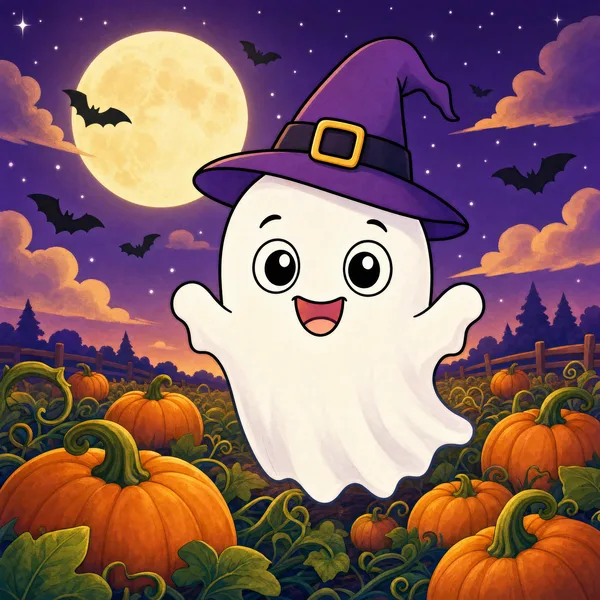
Three books, each made from one locked anchor. Open any of them to see every interior page — the character is the same on all of them.
What actually stops the drift
1. Generate a few candidate characters, not one
Describe the character once — "a round golden retriever puppy with a paw-print bandana" — and generate a small set of candidates as full-body, front-view line art. You are choosing a character, not finishing a page, so this step should be cheap and quick.
2. Lock exactly one of them as the anchor
Pick the candidate you want and lock it. From this point the character is an image, not a sentence. Everything after this refers back to that one picture.
3. Generate every page as an edit of the anchor
This is the step that actually stops the drift. Each page is produced by editing the locked anchor image into a new scene, not by writing a new prompt and hoping the model draws the same dog again. The scene changes; the character is carried over rather than re-invented.
4. Check the line art, not just the likeness
A page can hold the character and still be unusable. Scan each page for the five defects below before you accept it — they are cheap to spot now and expensive to find after you have uploaded a 40-page interior.
Five defects to check before you upload
Holding the character is necessary but not sufficient. These are the faults that make a technically correct page unusable as a coloring page, and they are the reason people are told to clean AI output in Photoshop before publishing.
1. Stray grey or black fill
Coloring pages must be pure black lines on pure white. Any grey wash or filled black area is a region the buyer cannot colour, and it drinks printer ink.
2. Broken or doubled outlines
A line that stops halfway, or two lines where there should be one, reads as a printing fault to a reviewer even though it came from the generator.
3. Regions too small to colour
Tiny enclosed shapes — fur texture, individual leaves — look detailed on screen and are impossible to fill with a crayon at 8.5×11 inches. This is the most common complaint in coloring book reviews.
4. Inconsistent line weight
If page 3 is drawn with hairlines and page 4 with thick outlines, the book stops feeling like one book. Line weight is part of character consistency, not separate from it.
5. Accidental text or signatures
Generators sometimes add scribbles that look like lettering. On a page meant to be blank line art it is obvious, and on a cover it is a rights problem.
Lock a character and see it hold
Generate a couple of candidates, lock one, and watch the same character come back on the next page. Free to start.
Open the Coloring Book MakerFrequently asked questions
What is character drift in an AI coloring book?
Character drift is when the same character looks different on each page — the ears change shape, the face gets older, the bandana disappears. It happens because each page was generated from a text description, and a sentence cannot pin down a face. Two prompts that read identically to you are two different starting points for the model.
Why does re-using the same prompt not keep the character the same?
A prompt describes a category, not an individual. "A round golden retriever puppy" has an enormous number of valid drawings, and the model picks a fresh one every time. To hold one specific character you have to give the model that character as an image and edit it, rather than describing it again.
How does Plykit keep one character across every page?
You generate a small set of candidate characters, lock exactly one as the anchor, and every interior page is then produced as an edit of that anchor image rather than as a new text-to-image generation. The scene changes around a character that is carried over, which is why the face stays the same on page 30.
Can I still change the pose and the scene?
Yes — that is the point. The anchor fixes who the character is, not what they are doing. Each page describes a different scene, pose or setting; the identity is what stays constant.
Does this work for more than one character in a book?
Each book locks one anchor character, which covers the common case of a single mascot running through the whole book. A book that needs two recurring characters is better made as two locked runs and assembled, because a single anchor can only carry one identity reliably.
Do I have to disclose that the artwork is AI-generated on Amazon KDP?
Yes. Amazon KDP asks you to declare AI-generated content when you publish, and that covers both interior artwork and cover artwork. Amazon treats AI-generated content as AI-generated even after you edit it substantially, so heavy editing does not remove the disclosure requirement — AI-assisted content is handled differently. The disclosure is made in the KDP publishing flow, not in the book itself. See Amazon KDP Content Guidelines for the current wording.
Do I own the coloring pages I generate?
Plykit output carries a commercial licence and no watermark on paid plans, so the pages can be sold. You remain responsible for the rights position of what you ask for — a character that copies an existing franchise is a problem regardless of which tool drew it.
Next: the full step-by-step for a KDP coloring book, or everything Plykit does for KDP.